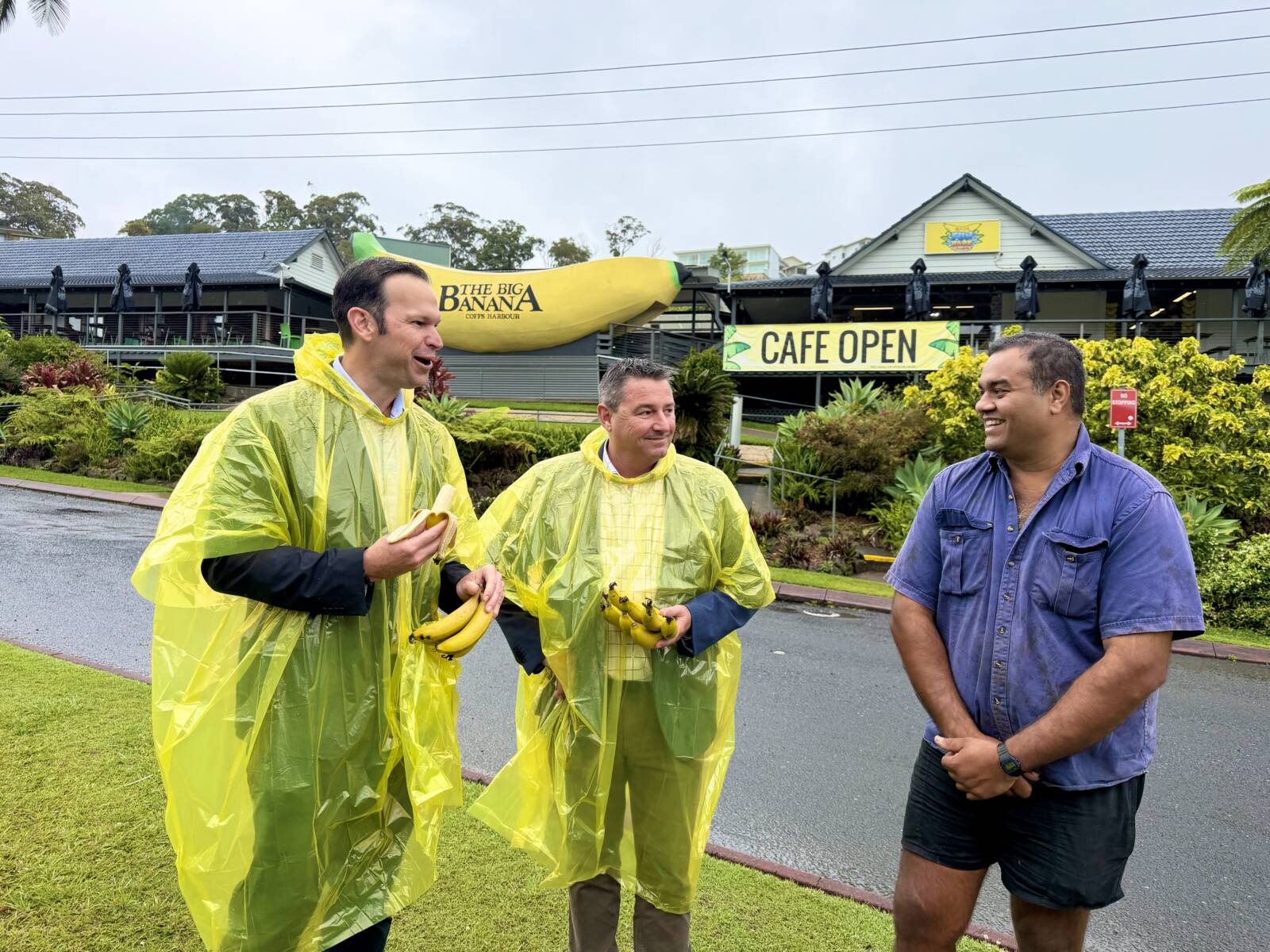
Leader of The Nationals Matt Canavan said Labor’s 30-month timeframe to finalise the Biosecurity Import Risk Analysis (BIRA) of importing bananas from the Philippines is far too long and creating anxiety among farmers.
Senator Canavan said Australia urgently needs to know if Labor is sacrificing our high biosecurity standards for political purposes, with the BIRA to look at the potential impact of three pathogens known as Moko, black Sigatoka and banana freckle.
“Our banana industry is simply too important to be put at risk,” Senator Canavan said.
“The potential of importing bananas from the Philippines is extremely worrying for farmers, as growers also face increasing red tape and higher fuel costs.
“Coffs banana growers are admired and supported locally – why can’t Labor support them too? Growers are in limbo in this process and it is madness the industry has been put in this position by Labor.
“The Australian Banana Growers’ Council has previously raised concerns about the assessment process of potential banana imports from the Philippines.
“The Growers’ Council is concerned about the fruit quality inspection process, as well as if packing houses will follow protocol and remove possible pest and disease transmissions.”
Member for Cowper Pat Conaghan said local growers are facing a double whammy, with some local supermarkets no longer using local produce and instead selling bananas from northern Queensland.
“It’s one thing to have a lack of support for locally grown bananas from a large commercial brand like Coles, but the impending threat for not just our local farmers but the entire Australian industry that is being imposed by their own Government is quite another,” Mr Conaghan stated.
“Thankfully, we have alternative major supermarkets and green grocers that continue to proudly stock and display the Coffs Coast’s world class fruit.
“But a potential flood of bananas from the Philippines could wipe our local harvests out of competitive contention. For Labor to even be considering this is lunacy and directly attacks Australian farmers’ ability to produce our food and fibre. Why risk our sovereignty?”
State Member for Coffs Harbour and New South Wales Nationals Leader Gurmesh Singh warned that it sets a dangerous precedent for all farmers.
“We grow the best quality produce in this region, so why would we want to import food from overseas?” Mr Singh said.
“We have seen Labor fail on biosecurity over and over, including the current fire ants outbreak in Sydney. Labor can’t manage it because they don’t care.”
New South Wales Farmers spokesperson and prominent local banana farmer Paul Shoker said the consideration of fruit from the Philippines flies in the face of post-COVID and current petrol crisis realities.
“Have we learnt nothing over the past six years when it comes to protecting our nation’s supply chain?” Mr Shoker asked.
“Apart from the considerable bio-security hazards posed by bananas imported from comparatively unregulated countries like the Philippines, I just can’t understand why this Government isn’t putting our ability to produce our own critical resources first.
“Take a look at our extortionate prices at the petrol pump because of being completely reliant on an overseas supply that is outside of our control.
“Do we want that to happen to our food supply as well? We don’t need overseas supply. We need to keep supporting the farmers who feed and clothe our local communities and safe-guard our own population.”
Chair of Banana Imports Committee, Paul Inderbitzin, said the Department of Agriculture, Fisheries and Forestry (DAFF) is expected to release its draft of the BIRA in the first six months of next year.
Mr Inderbitzin added that if Moko or black Sigatoka were to get a foothold in Australia, it would effectively wipe out the banana industry.
“We take looking after the environment seriously here, and our options for controlling pests and diseases are becoming more limited,” Mr Inderbitzin said.
“If we faced an outbreak of even one of these diseases, we’d be looking at widespread, expensive control measures and a near-impossible chance of eradication. Few of us growers could survive that.”